An Awe-inspiring underwater masterwork ten years in the making.
15 ft × 9.5 ft · 1969–1978 · Acrylic on canvas
By Robert Young
Laguna Beach, CA 1936-2012
Ten years. More than two million DOTS.
One monumental canvas.
Created over a decade beginning in 1969, The Big One is Robert Young's monumental expression of a lifetime spent beneath the surface of the sea.
The painting survived the destruction of Young's Laguna Canyon home, spent three decades at the Hubbs-SeaWorld Research Institute, and has since been exhibited at the Festival of Arts and Laguna Art Museum. Today, the Young family is seeking a permanent home where it can once again be experienced at full scale.
AT A GLANCE
THE BIG ONE
Artist
Robert Young (1936–2012)
Begun
1969
Completed
1978
Dimensions
15’ X 9.5 ‘
Medium
ACRYLIC
Exhibition History
Festival of Arts, Laguna Beach · 2013
Laguna Art Museum · Art & Nature · 2023
Former Installation
Hubbs-SeaWorld Research Institute · San Diego
Current Status
Professionally preserved and stored on an archival tube
Placement
Available for acquisition and permanent institutional/public placement
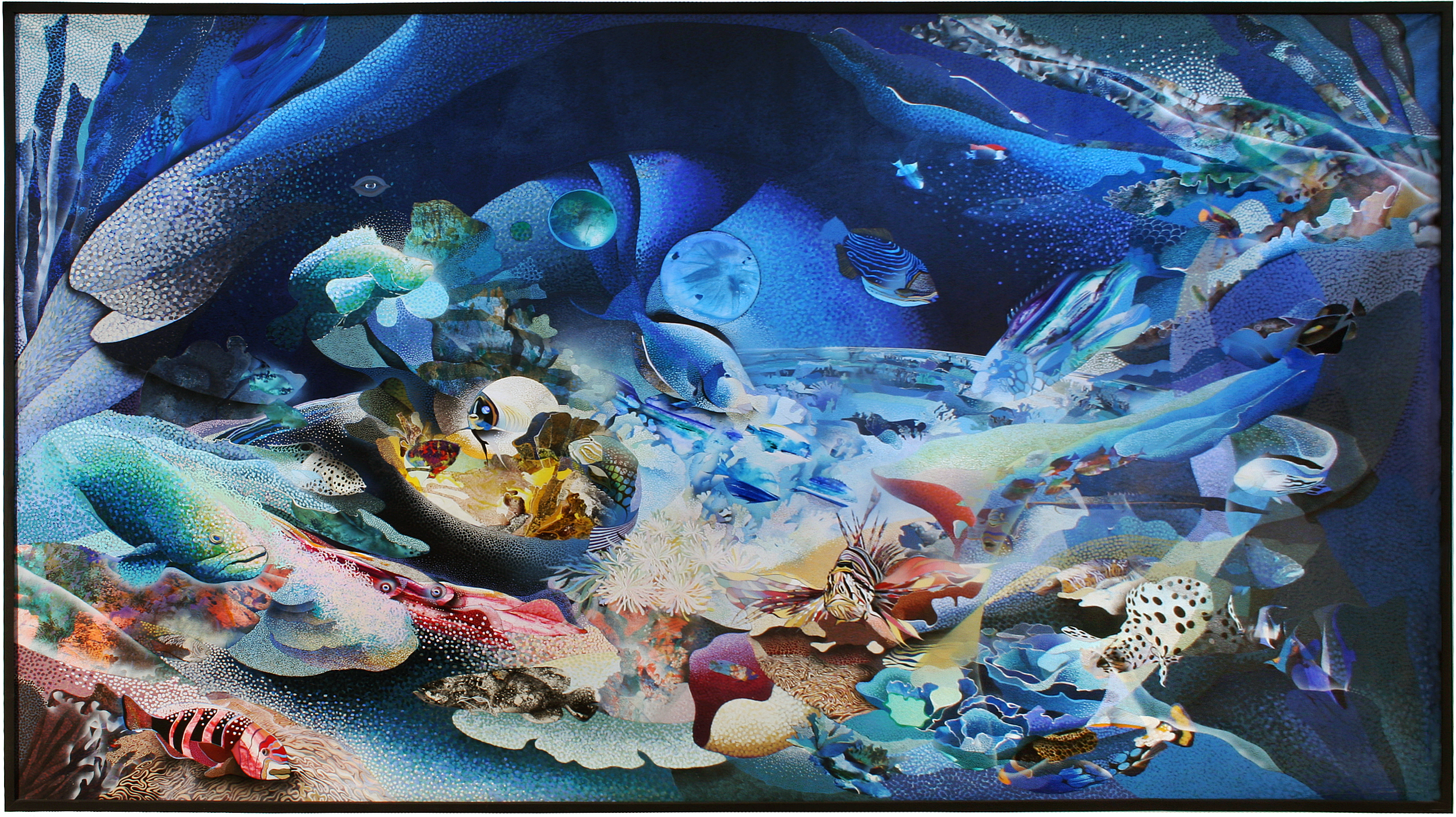
The Big One, Robert Young
Acrylic, 15 ft x 9 ½ ft, 1969-1978
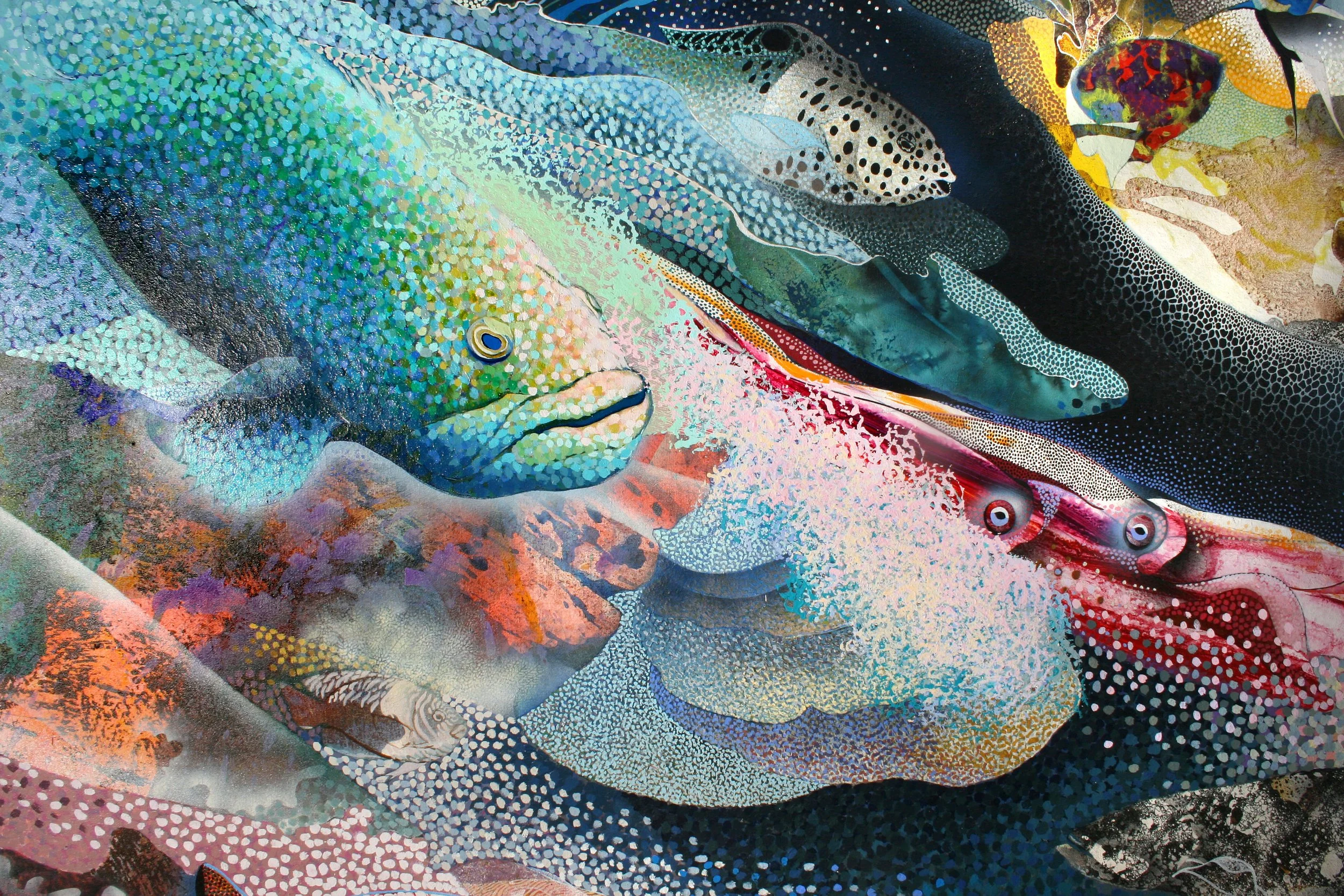
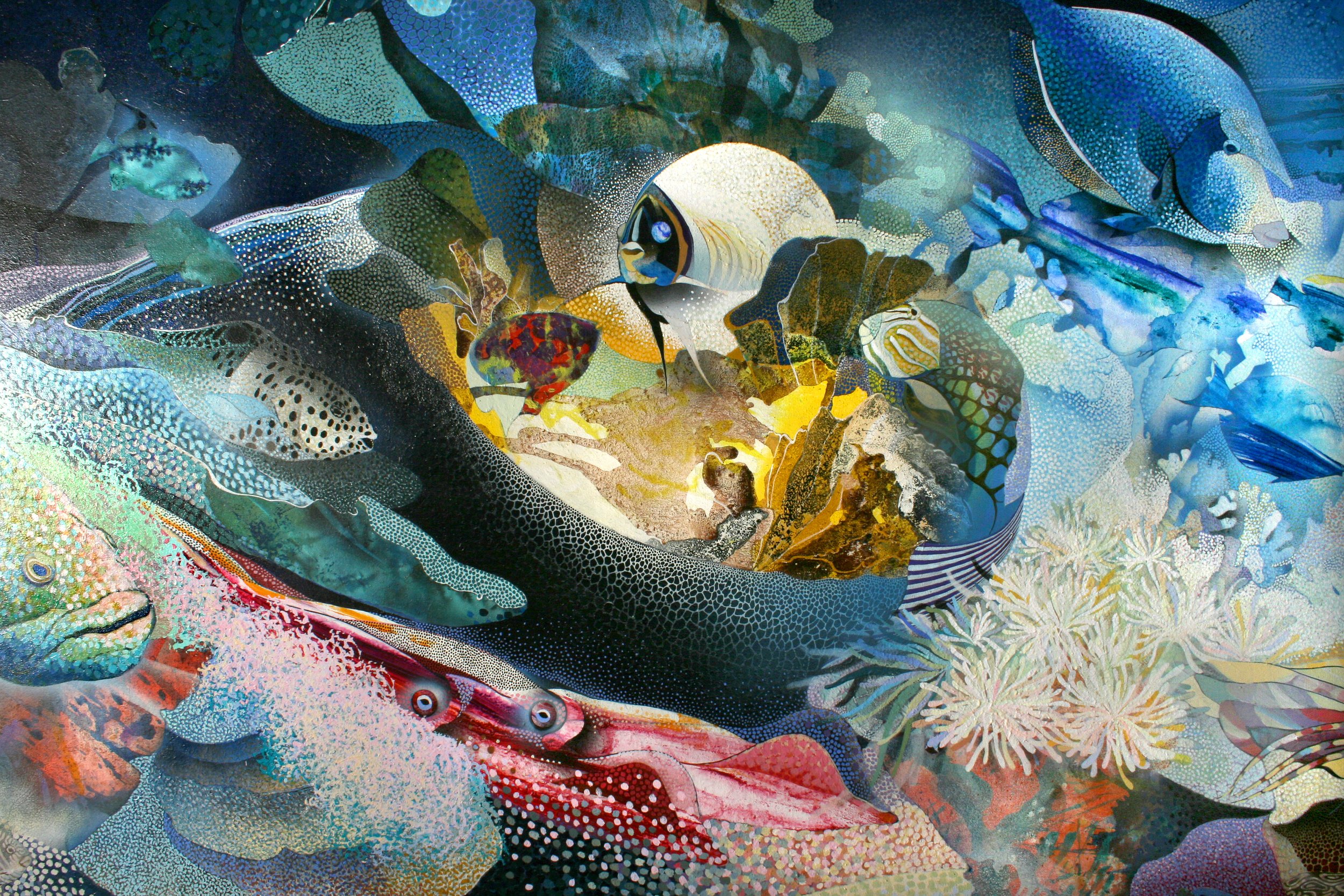
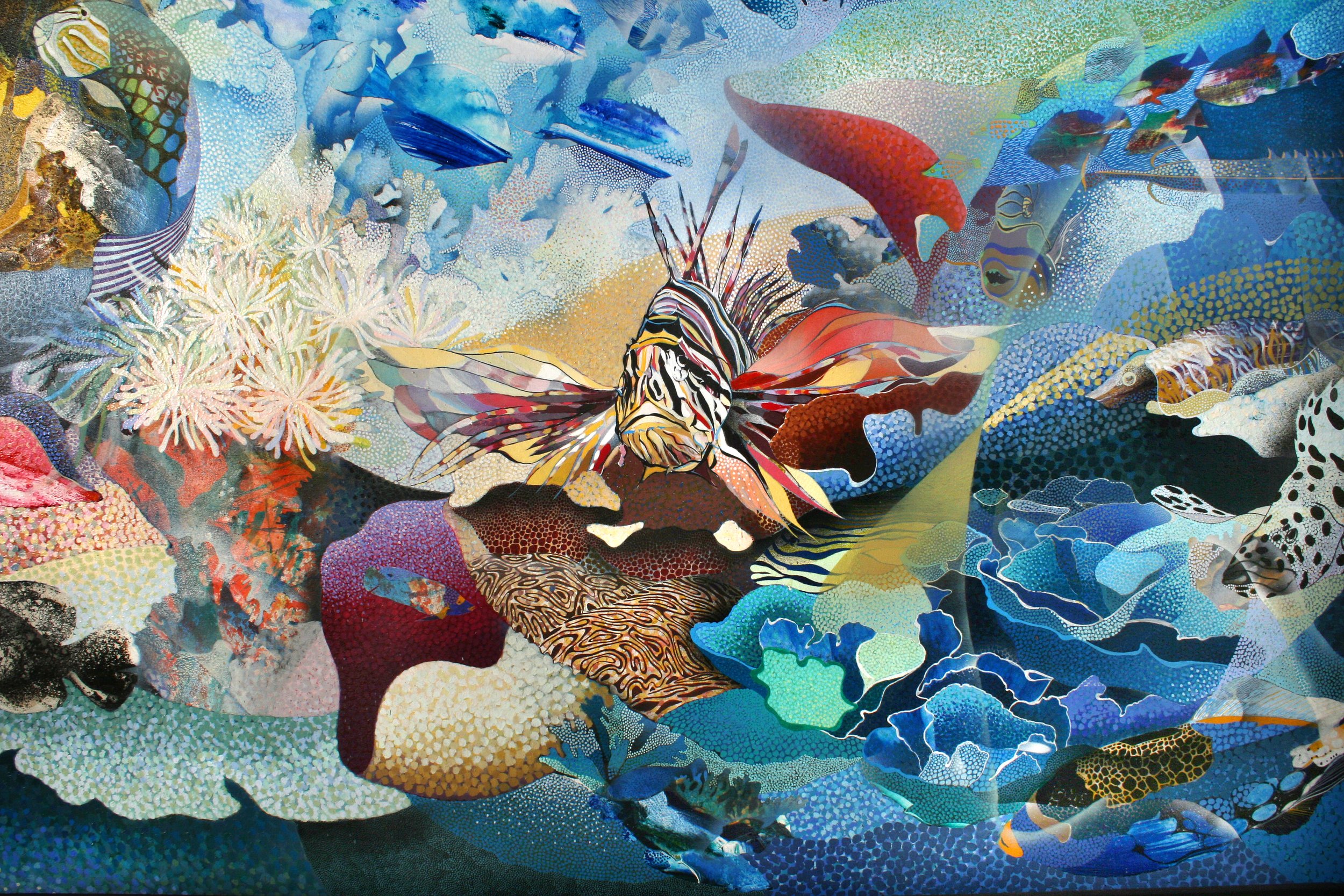
“My approach, using dots and overlays, was slow and painful.
But buildup of brush work would eventually give me a more symphonic color range and achieve the feeling of a coral environment.”
The surface was painted completely six times, with some areas reworked as many as twenty-five times.
Young estimated the finished work would contain more than two million dots.
A Legacy of Ocean Reverence.
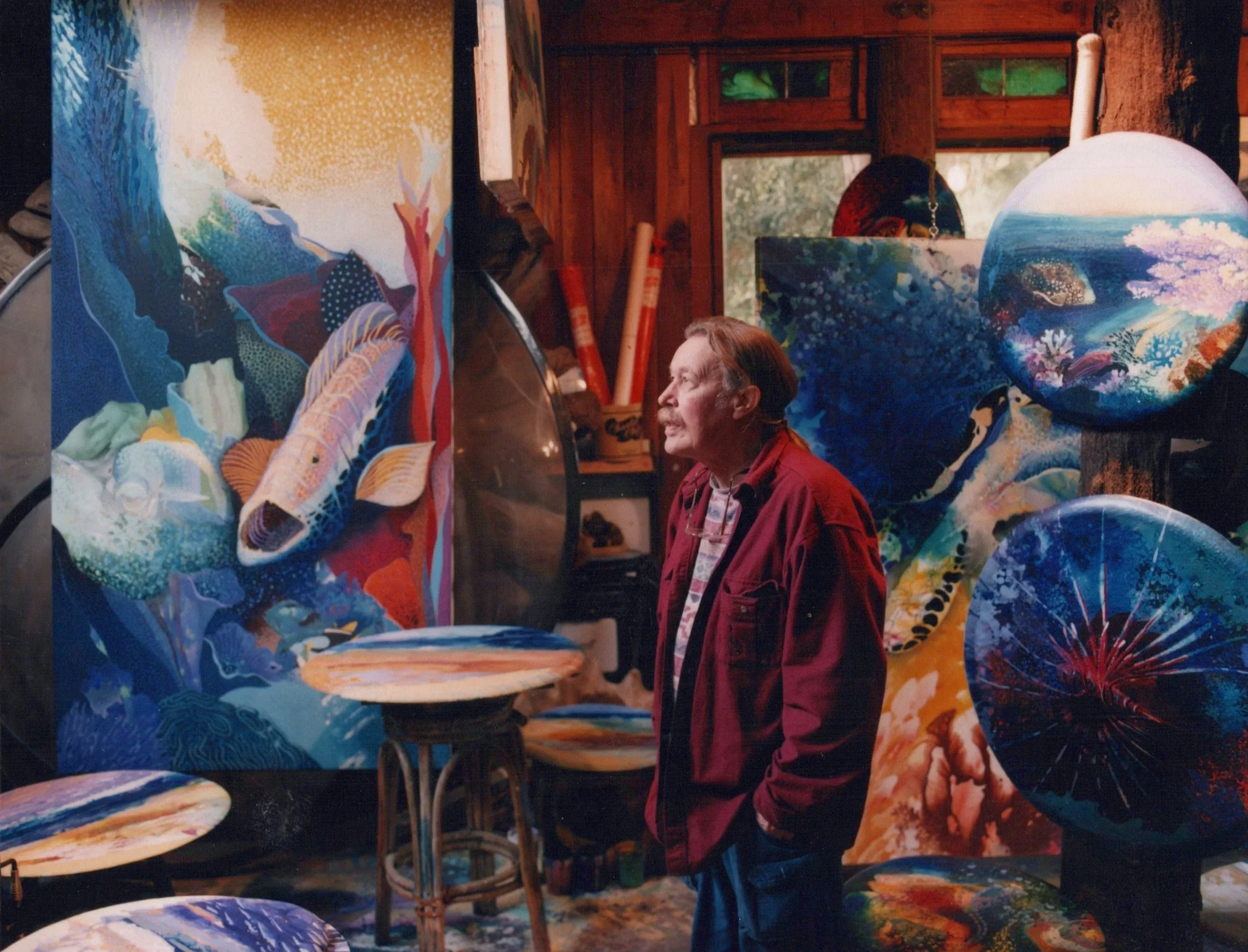
Robert Young spent a lifetime looking beneath the surface.
A Southern California native, Young began exhibiting at Laguna Beach's Festival of Arts in 1959, earned his MFA from Otis Art Institute in 1962, and helped found the Sawdust Festival in 1968.
For forty years he dove the waters of the Pacific, Hawaii, Mexico and the Caribbean, returning to the studio to translate what he had experienced below.
“The sea helps to establish one's perspective and reverence for life.”
— Robert Young
the diver. the artist.
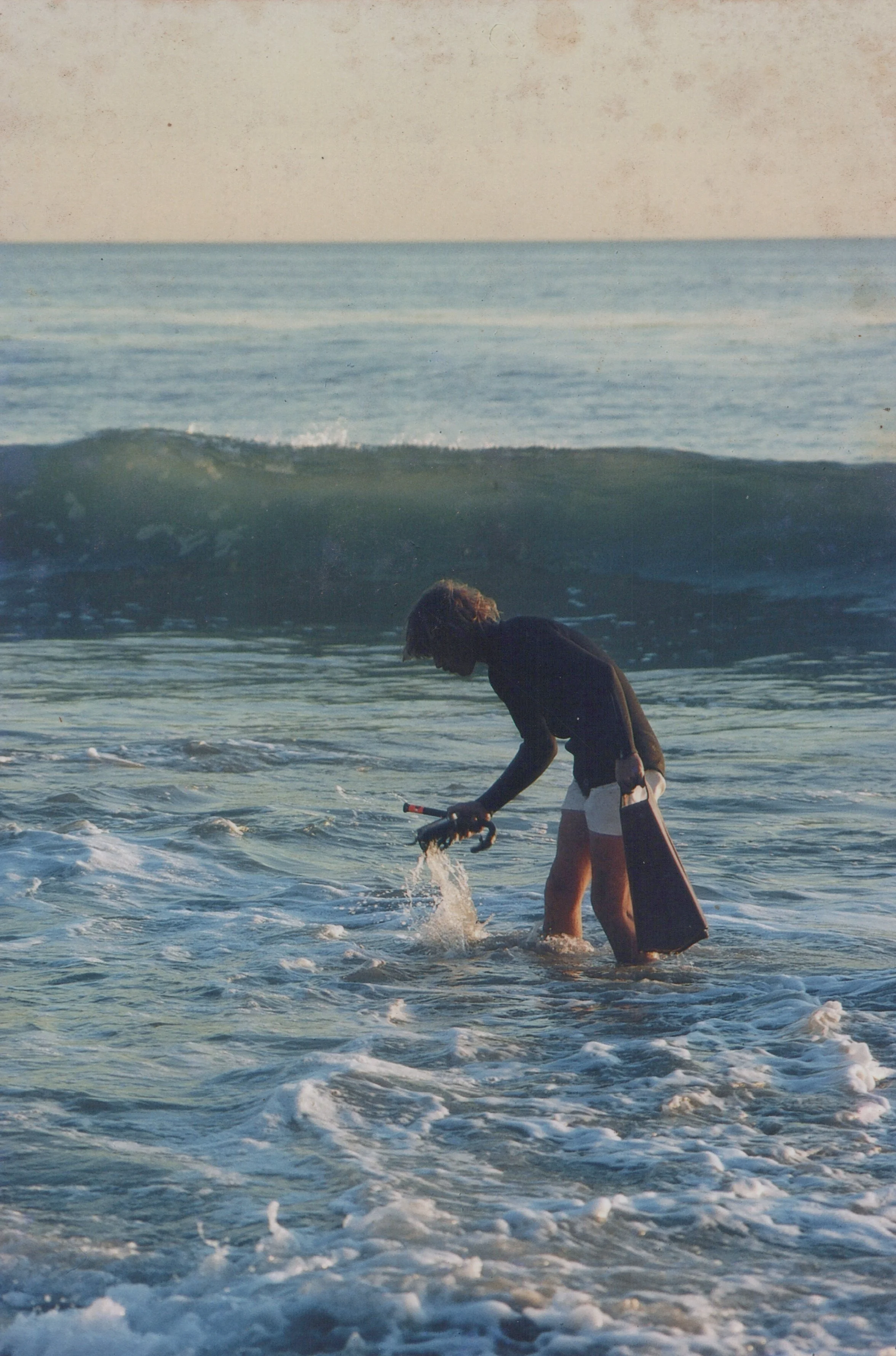
“When Bob Young put on a diving mask back in the '40s and dove below the surface of the ocean at old El Morro... in an aesthetic sense, he never came up again.”
In the spring of 1969, Robert Young stretched a canvas
—with a broken hand
That canvas would become The Big One.
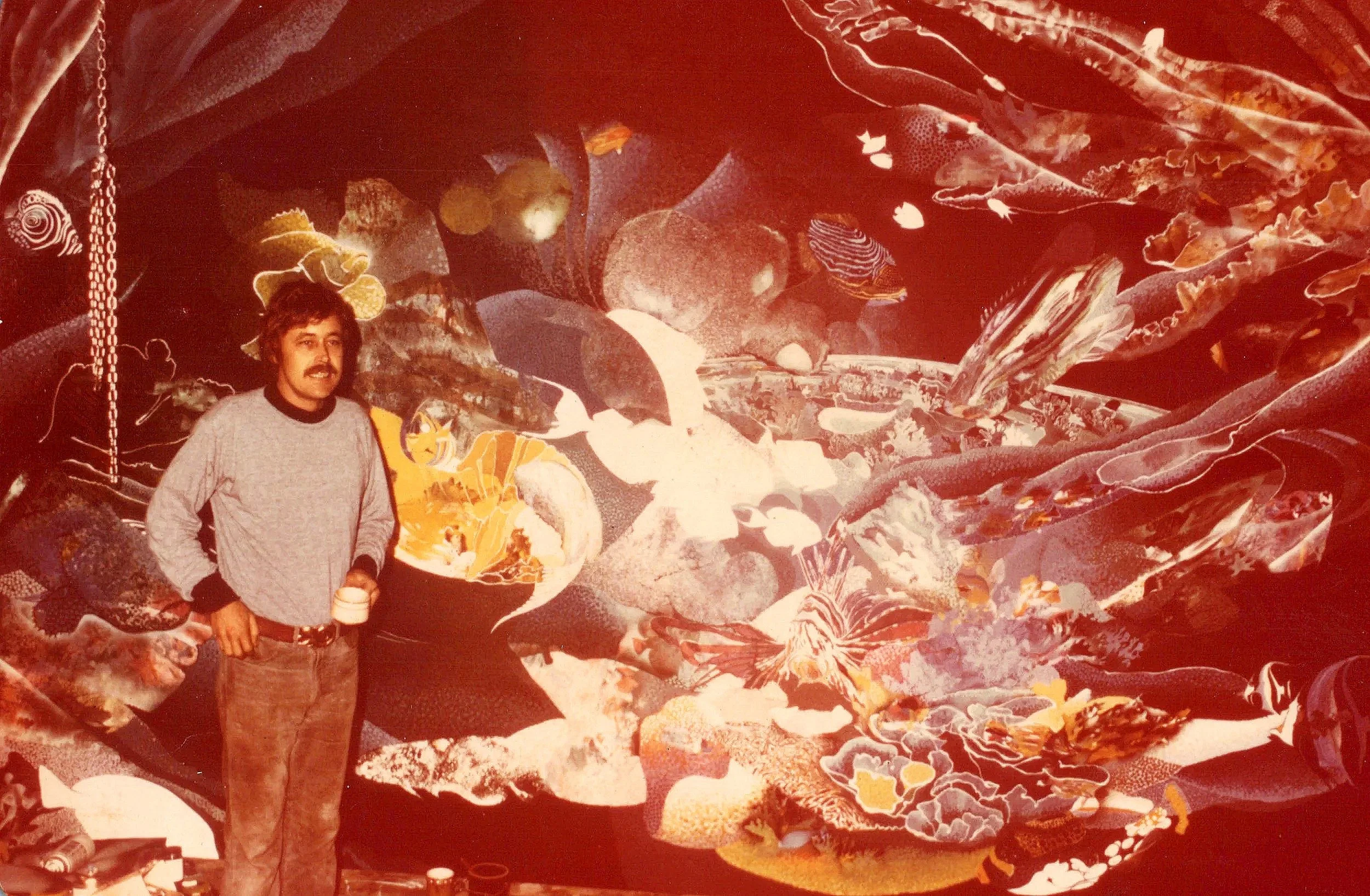
It began, like all his paintings, horizontally — spontaneous washes, splashes, and overlapping layers of color cascading across the surface from several directions. Over time the chaos coalesced into intention.
He raised it upright, supported by an overbuilt structure, whereby not only the verticals but the horizontals were made of salvaged telephone poles, constructed in the backyard of his home on Roosevelt Lane.
He covered the entire surface of the painting one dot at a time. Then he covered it again. Then again.
"The painting keeps growing. Various people say I'm overworking it.”
“My feeling is, I'm just coming to terms with it."
—Robert Young
the night the trees fell.
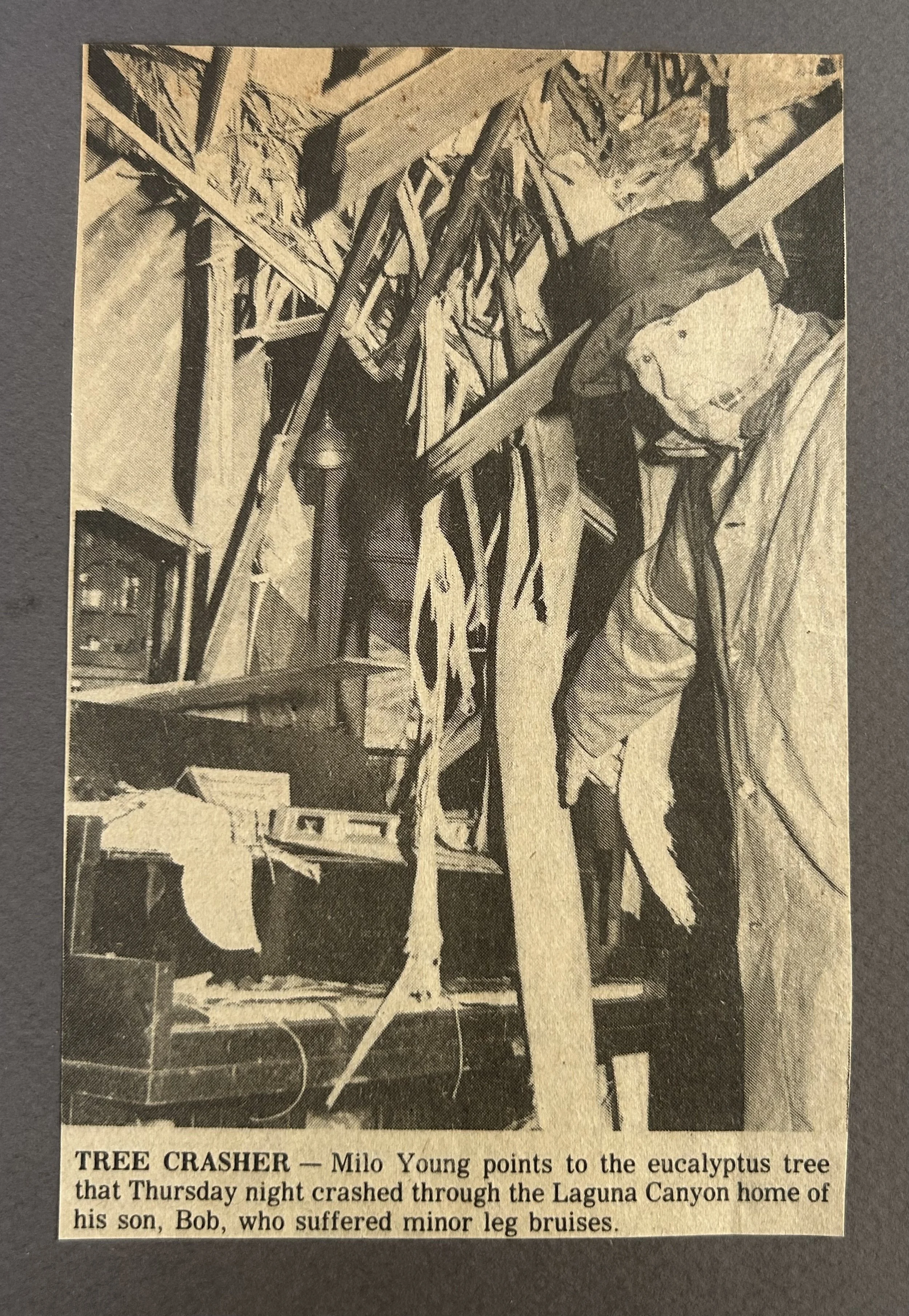
Milo Young, Robert’s father, surveys the wreckage of the family home after the storm.
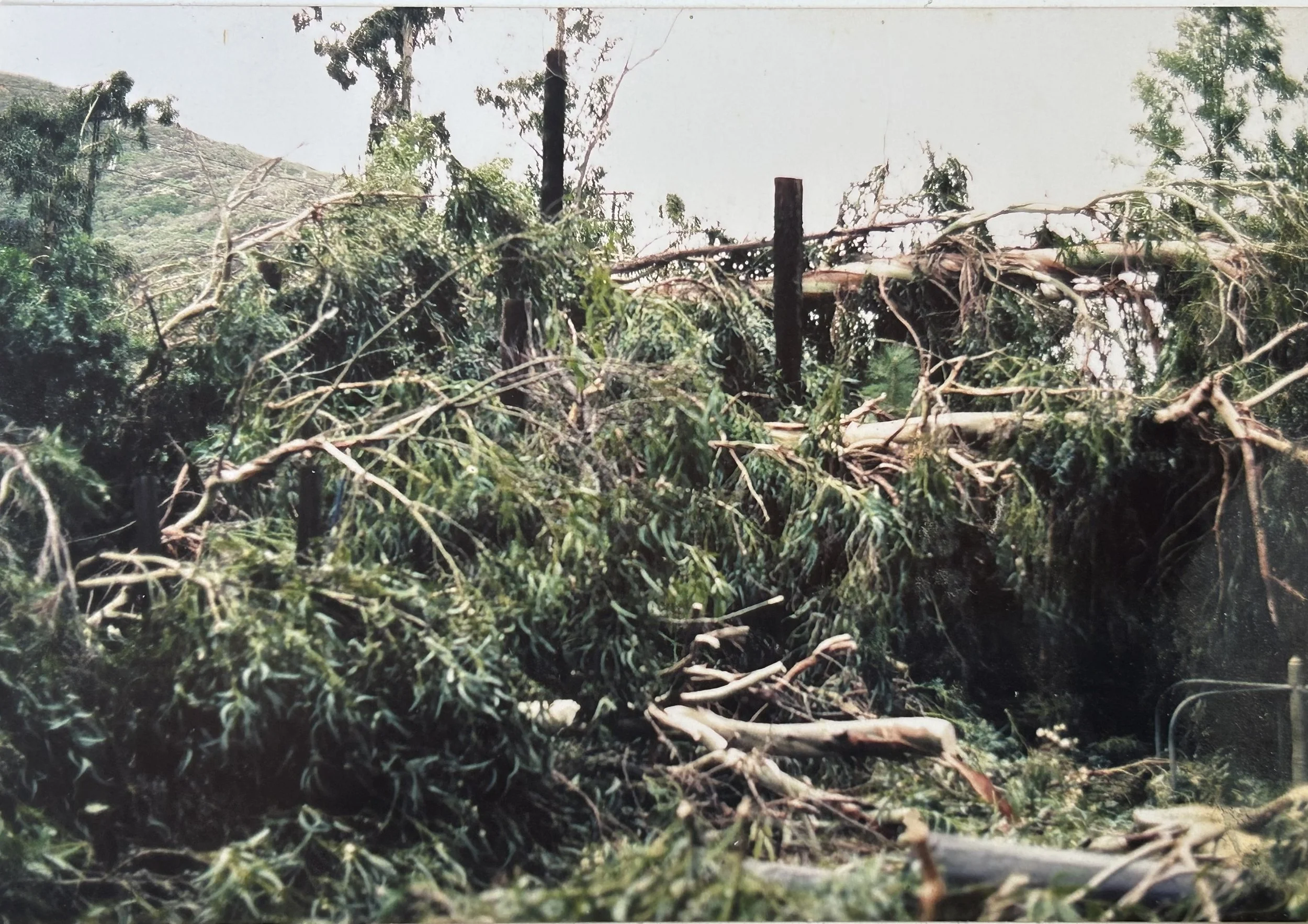
February 10, 1978.
Twenty-five 90-foot eucalyptus trees came down in Laguna Canyon in a single night.
One flattened Young's car. Two demolished his house. A third fell over The Big One.
The telephone poles held. Robert survived. The painting survived.
THE BUILDING GREW AROUND IT.
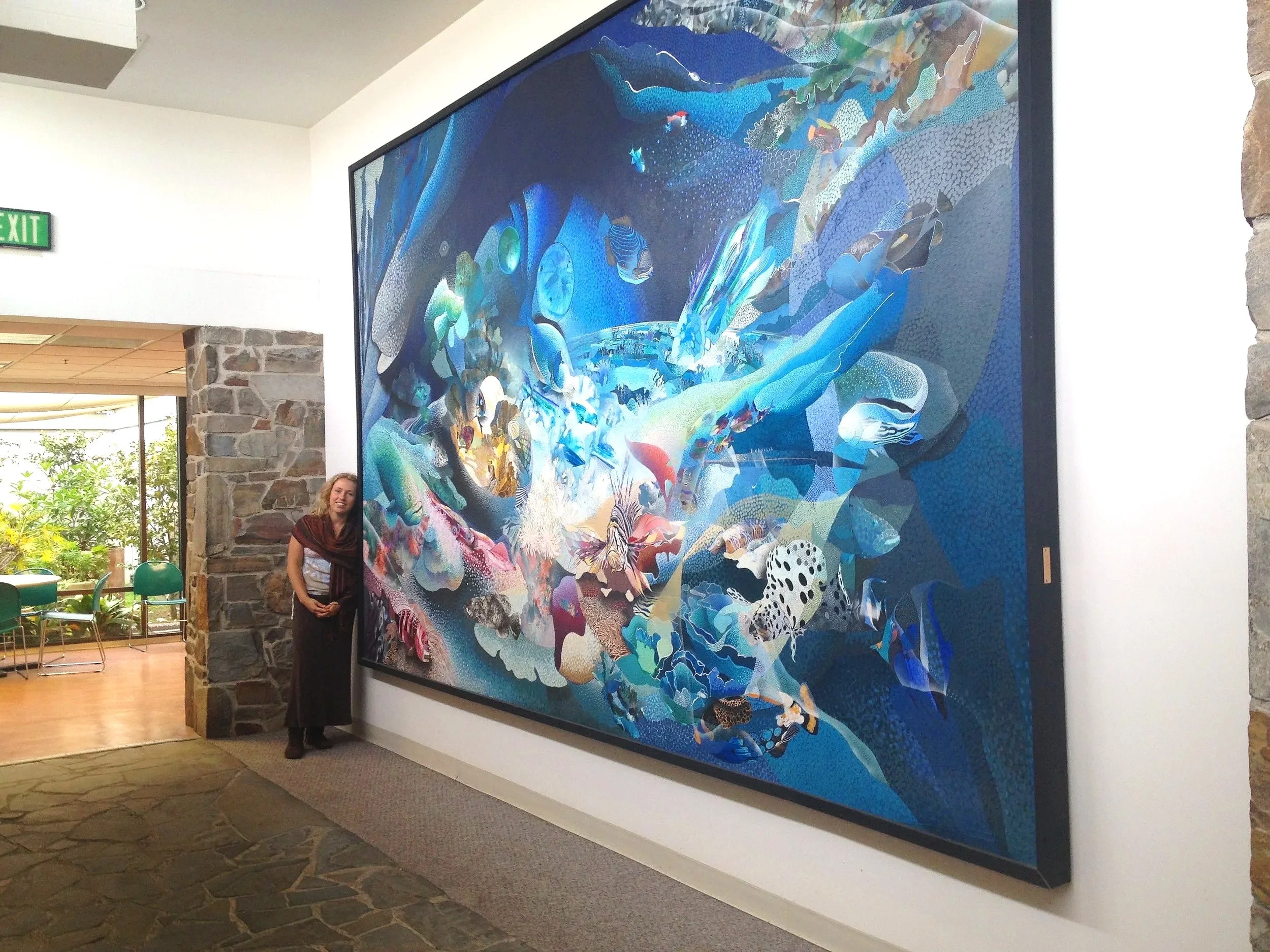
The Big One eventually made its way to Atlantis, a SeaWorld-affiliated restaurant and event space in San Diego. At fifteen feet wide, simply getting it inside was an undertaking—the doors had to be removed to bring the painting into the building.
Years later, the space itself was remodeled and became The Hubbs-SeaWorld Research Institute.
The building changed. The painting stayed.
There, surrounded by an institution devoted to marine research and conservation, Robert Young's monumental underwater world remained installed for nearly three decades.
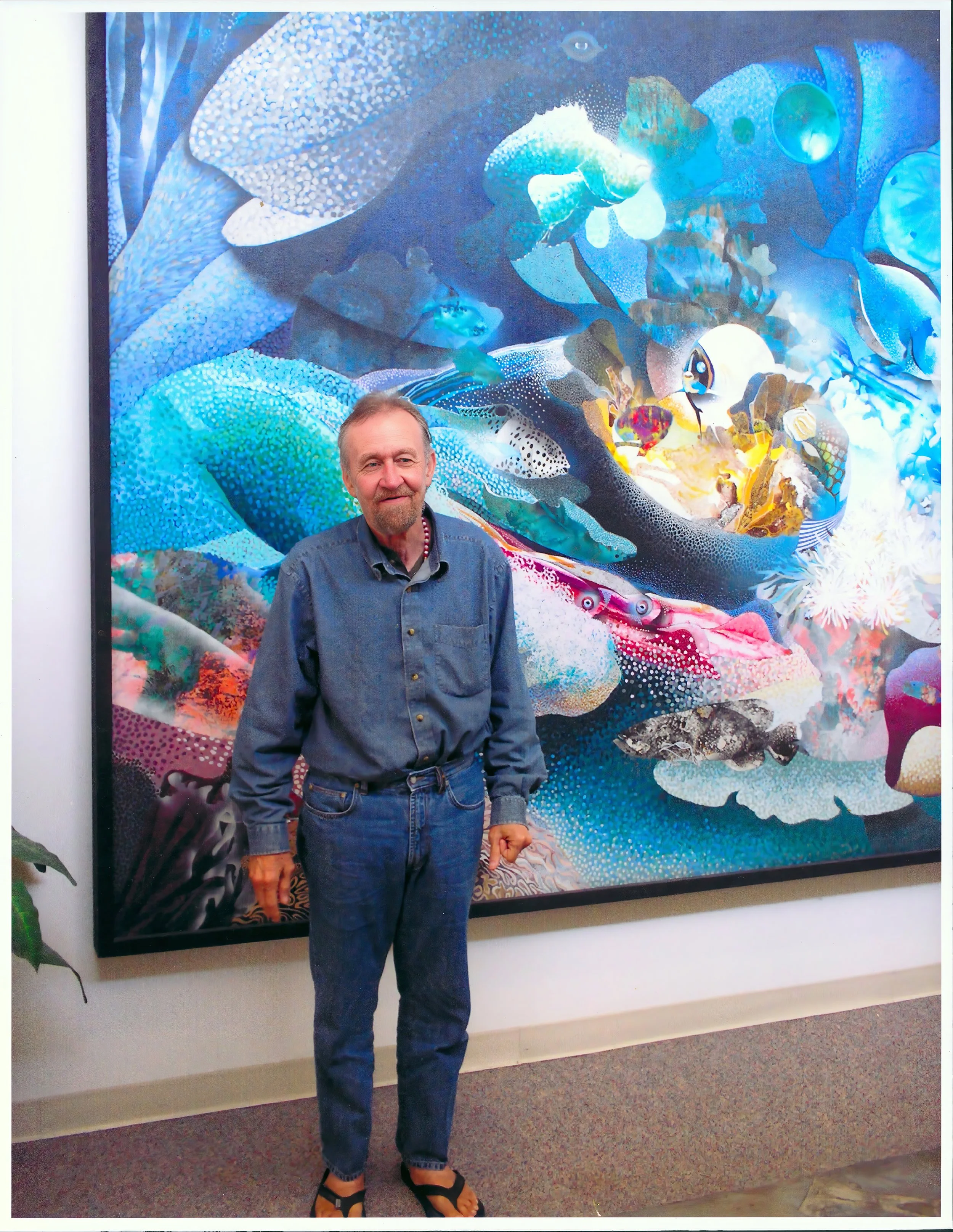
one last visit.
Young continued to visit the painting over the years.
Near the end of his life, as dementia increasingly affected his ability to communicate,
his wife, Deborah, brought him back to see The Big One.
When he turned the corner and saw the painting he had spent nearly a decade creating, his face lit up and he put three words together,
“That was fun.”
And that said it all…
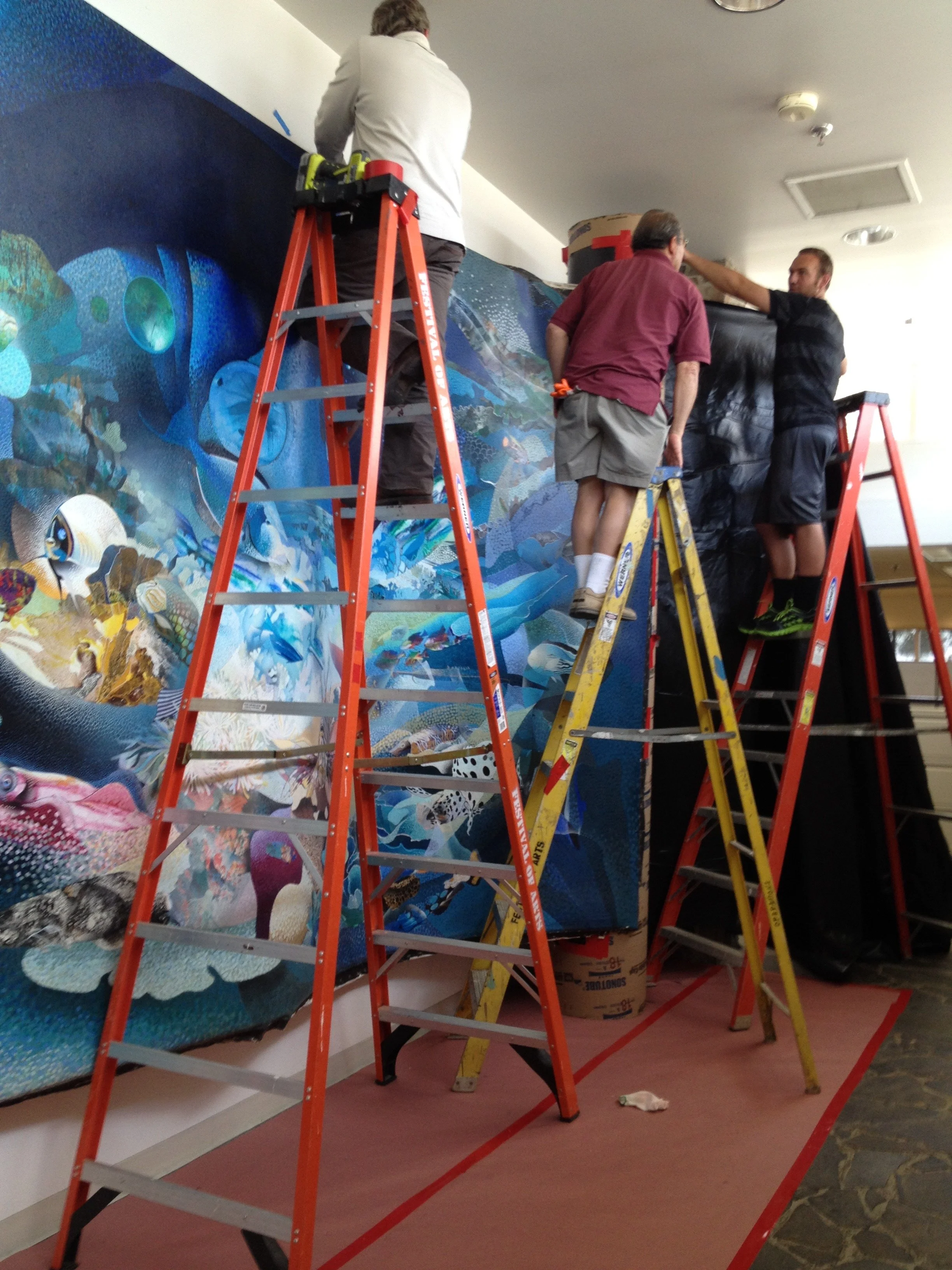
coming home
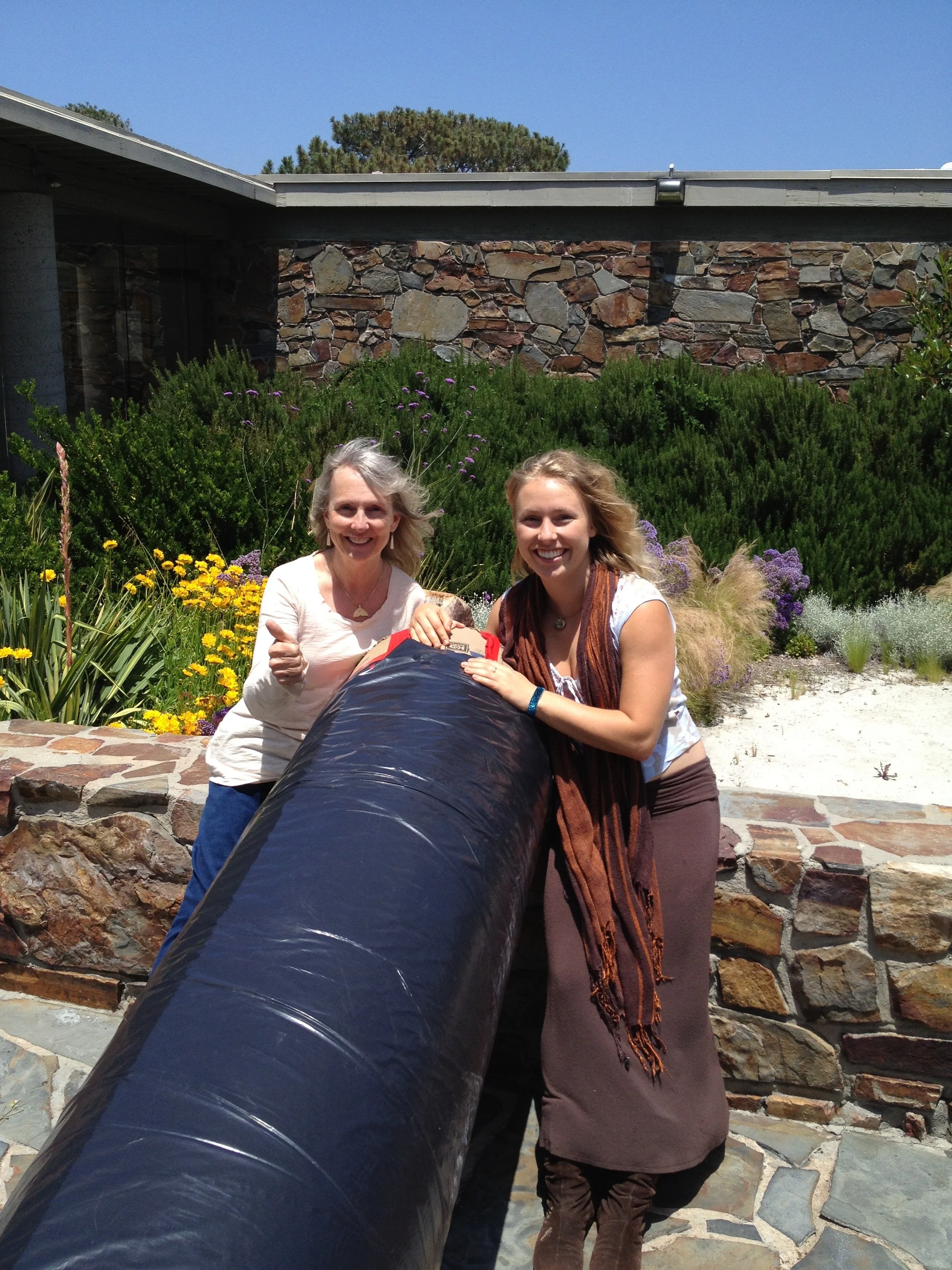
In 2013, a year after Robert's death, Deborah Young returned to Hubbs-SeaWorld to bring The Big One home.
After nearly thirty years on the wall, removing a fifteen-foot painting was a huge undertaking of its own. Since the building had changed around it the painting had to be carefully disassembled to move it.
Six people. Three ladders. A twelve-foot tube. Thousands of staples.
Working across the enormous canvas, the professional team removed thousands of staples and carefully rolled the painting onto a twelve-foot tube for transport.
After decades away, The Big One was coming home.
up for air
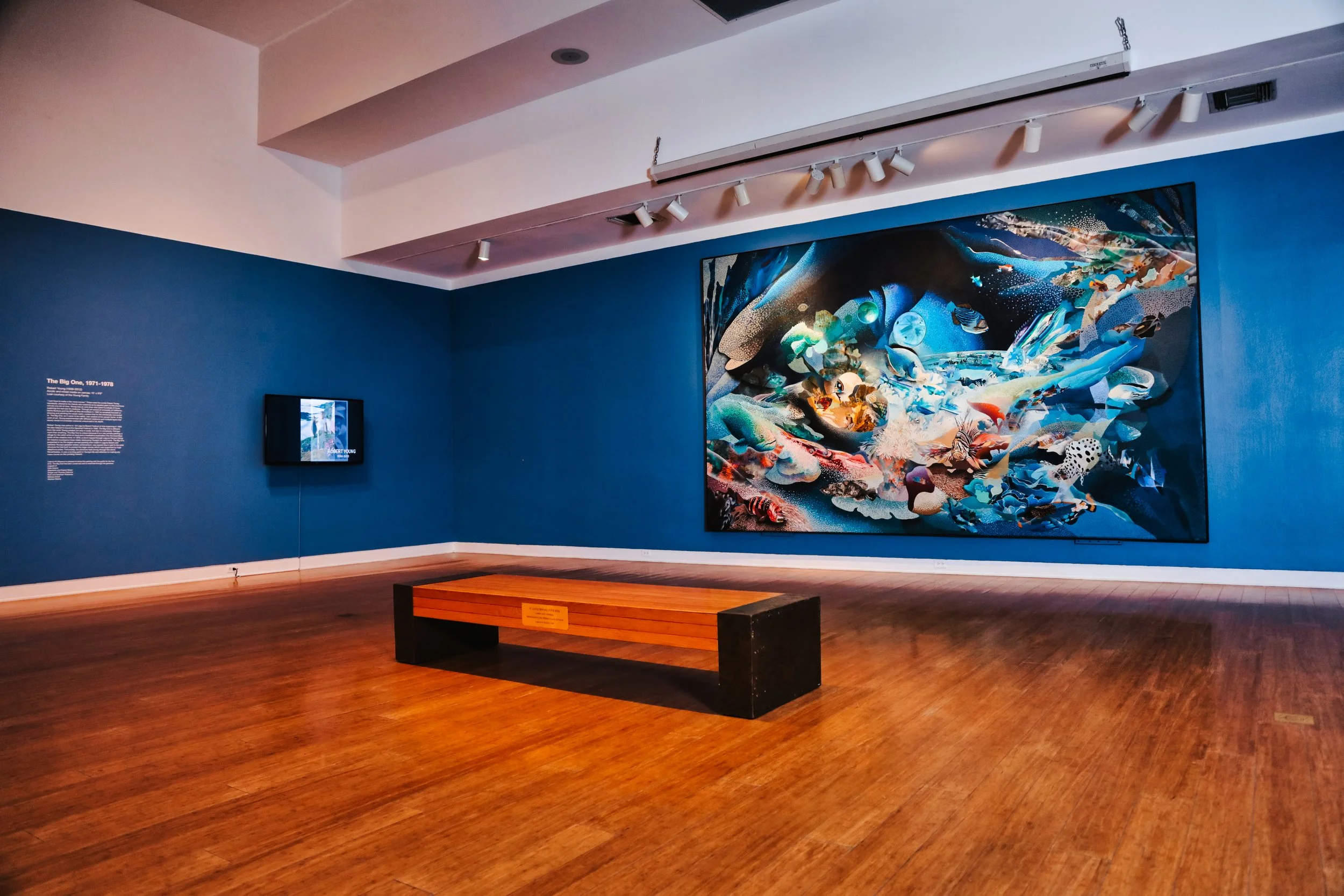
2013 · Festival of Arts, Laguna Beach
2023 · Laguna Art Museum, Art & Nature
it ought to be in public
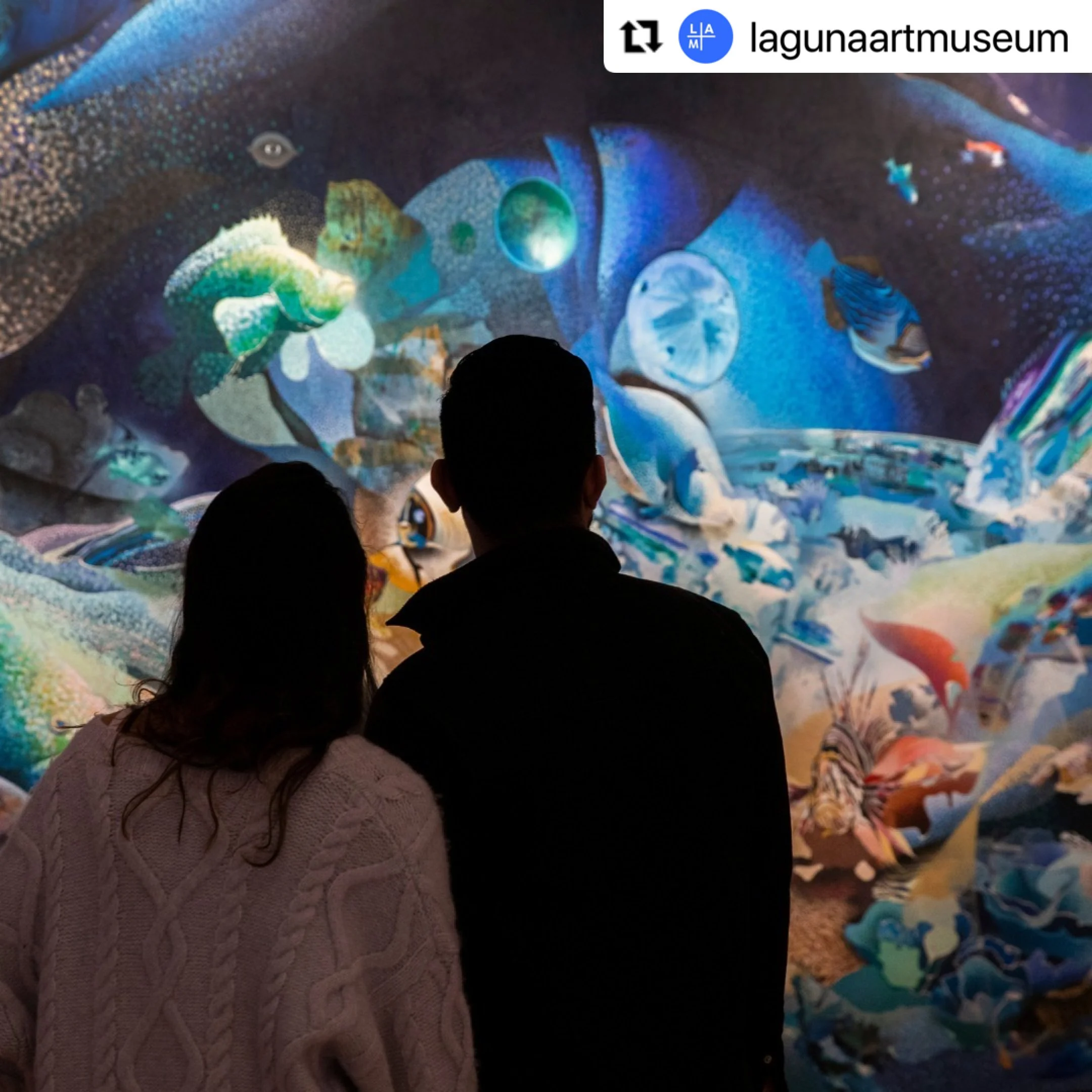
“It ought to be in public view.”
— Dion Wright
Sculptor and longtime friend of Robert Young
“Who will build the venue for Laguna's most spectacular, conscious and fully realized art work?”
For more than half a century, The Big One has survived creation, catastrophe, decades of institutional installation, and two major public exhibitions.
Today, the Young family is seeking a permanent home where the painting can once again be experienced
at its intended scale.
one last move.
In ballet, we end every class with a reverence—a formal gesture of respect toward the teacher, the accompanist, the fellow dancers and the audience.
It closes what cannot be left open.
Finding a permanent home for The Big One is my reverence to my father.
Dion Wright asked who would build that venue. Perhaps that venue already exists.
— Charlotte Young Massaquoi
Legacy Curator, YOUNG SALT Estate of Robert Young · Laguna Beach, California
ACQUISITION & PLACEMENT INQUIRIES:
For acquisition, institutional placement, exhibition, or additional information regarding The Big One, please contact the Young family below.
The Young family welcomes inquiries regarding the acquisition of The Big One, including from collectors, institutions, hospitality groups, corporations and other organizations capable of providing an appropriate setting for this monumental work. Permanent public visibility is strongly preferred.